Categories
Devotional Thoughts Ministry

You are Welcome at the Table

You are welcome at the table of the Lord. Yes, you. And you. And you. Absolutely everyone in the world with open internet access (and a good translation app) can read this blog. That means I’m potentially addressing anyone in the world, and I’m including them all in the first sentence.

My tween and I weren’t feeling like getting up and dressed for church this morning, so we planned to stay home. No, it’s not that we were being slack; in fact, we attend small group Bible studies and worship pretty much every week. But there wasn’t really going to be a Bible study for her due to a retreat she opted not to go on, and our small group facilitator was out of town, so there was going to be something vital missing for us. Instead, we rested and then took advantage of being able to livestream the worship service of a church about two hours away.

For that hour, we were transfixed and transformed. In our living room, the two of us joining together with thirteen other parties online and many more in person, we worshipped. Responsive readings. Liturgies. Hymns. Spirituals. Prayers. We joyously participated in this worship. And we got convicted and uncomfortable. It’s the kind of discomfort that makes me want to DO something but has no idea where to start. I feel clumsy and fumbling in my efforts, and my OCD and hatred of that feeling–of not having it together before I start–can make me give up before I even begin. But I want to begin. As imperfect as my attempts may be, I pray that God blesses and refines the attempts to bring God’s love and justice to all I encounter.

Click play to listen to the powerful sermon. While it might not tick all the “proper sermon form” boxes, it was most definitely Spirit-breathed. (If you have time, go ahead and watch the whole service; it’s all inspiring.)

This service’s theme of being welcome to the table and there being ample room at the table reminded me of a pastor’s words of comfort and grace one Sunday service over a decade ago. When children misbehave, it is sometimes customary for their parents not to allow them to sit at the table for dinner, or maybe to dismiss them to their rooms from the dinner table. “Go to your room!” they command. Yet God never does this; God never dismisses us from the fellowship of the table. All are welcome. You are welcome. There’s plenty of room at the table, and I’m happy to dine with you.

Please follow and like us:
Pin Share
Categories
Ministry

When a Bandaid Hunt Brings Happiness and Sadness

Please follow and like us:
Pin Share
Categories
Devotional Thoughts Mental Health

Handling Anxiety–Old Testament and New

We think anxiety is a fairly new problem with which to deal. We talk about anxiety disorders and it’s not uncommon to see commercials on television or ads in magazines touting the benefits of this anti-anxiety medication or that one. In short, anxiety is in front of us in a way it wasn’t forty or more years ago.

Yet, anxiety is a timeless condition. Jesus spoke about not worrying in a passage that is quite familiar to me–and, in fact, one I include in Finding Peace. Imagine my surprise when I found another word on preventing anxiety, this time in the Old Testament book of Ecclesiastes.

Ecclesiastes is from the body of Old Testament wisdom literature, presumably written by Solomon. We sometimes joke that the theme of the book is the meaninglessness of everything. Life is meaningless. Death is meaningless. Work is meaningless. Laziness is meaningless. “Meaningless! Meaningless!” says the Teacher. “All is meaningless!”

What isn’t so meaningless, though, is finding joy in the every day. The Teacher says, “Always be clothed in white, and always anoint your head with oil. Enjoy life with your wife, whom you love, all the days of this meaningless life that God has given you under the sun–all your meaningless days” (Eccl. 9:8-9a, NIV). The lesson here is to make the most of each day. Be present in each day. This is a command; “Do this,” the Teacher says.

I love a good three-point argument, and the Teacher doesn’t disappoint. First, he says “always wear white.” Get dressed in clean clothes. Don’t be slouching around in your pajamas and grungy clothes every day. Second, the Teacher instructs his students to anoint their heads with oil. This was a basic grooming and hygiene practice for this time period. It would be the like the modern-day equivalent of washing and styling your hair. In other words, take care of your body. Last, he says, “Enjoy life with your wife, who you love.” Be mindful and intentional of your relationships. Enjoy them, not just life with your spouse but also your children, your grandchildren, your circle of friends who are like family. Live into the moments with them because those moments are so short.

In the New Testament, we encounter a different rabbi, a different but no less wise teacher. We see Jesus and hear his instructions. In the Sermon on the Mount (Matthew 5-7), we see Jesus telling his listeners how to live. His teachings have two main foci: Authentic faith living and not being wrapped up in temporal concerns. In the second part of chapter 6, Jesus tells his listeners to look around them, to see the flowers and birds. God takes care of them, so would not God take even better care of God’s own children? The birds don’t stress about working and never go hungry; they always have enough. The wildflowers that are so beautiful–even more beautiful than Solomon in all his royal robes, Jesus says–are tomorrow’s fire fuel. God makes them look that good, so God will also attend to our bodies’ needs for clothing.

Then Jesus gives a command, this time a “don’t.” “Don’t worry about tomorrow,” he instructs, “for tomorrow will take care of itself. Today’s got enough worries of its own for you to deal with” (Mt. 6:34). We don’t feel anxious about what’s going on now because we’re experiencing it in this moment. Anxieties come when we start fretting about some future event or concern. Will we be able to afford that new hot water heater? How will we pay for our child’s college? What if no one at the reunion talks to me? These are legit, real concerns, and many people struggle with them.

What Jesus is saying here is, “Be present to today.” A few verses before this one, Jesus asks, “Who of you can add one inch to his height by worrying?” We can’t. Worries, stresses, anxieties–however you want to label what you’re feeling and going through–do not benefit us in any way and, in fact, rob us of what joy we can find in today. My husband and I are in that “How are we going to pay for that new HVAC system?” season of anxiety. It’s hotter than Satan’s arm pit outside and our air conditioner chooses now to act up. If I were to spend all my time fretting about this very ugly reality, then I would forget to pay the here-and-now bills, feel too overwhelmed to want to shop for groceries, and be completely unable to show up for my girls. These are all of today’s concerns and responsibilities, and they are what require my attention now. As I live into these things, guess what happens? I manage to let go of some anxiety. The HVAC is still an issue. However, by following this simple command of Jesus, I have changed how anxious I feel.

However you choose to live into today, do it. Be present to every minute. Show up for yourself in ways both small and big–everything from getting dressed in the mornings to working out. Show up for others and be present in your relationships with them. Focus on the now instead of the uncertain future. These will all help you beat anxiety.


Please follow and like us:
Pin Share
Categories
Devotional Thoughts

Health Sacrificed to Idols

We Americans are selfish. We’re selfish in our rugged individualism. Don’t need no one, don’t want to be beholden to anyone, don’t wanna take care of no one. Even American evangelicalism with its emphasis on one’s personal relationship with Christ is an extension of the American idol of individualism.

We see this same idolatry of the individual in how people are responding to vaccinations and new mask mandates. “Don’t take away my freedom!” they cry. Or, “My body, my choice!” Conspiracy theories abound about the supposed lack of safety in the vaccine or crazy ideas of Bill Gates planting nanochips in people through the vaccine. (Do you really think Gates doesn’t have anything better to do?) What’s the point of getting the vaccine, they argue, if you can still catch the virus? Or, if masks worked, there wouldn’t still be people getting sick. Thing is, masks are like parachutes; they’re not worth much if you leave them in the bag.

This is so disparate from how the Bible tells us Christians are supposed to live. (I’m not being exclusive toward nontheists, but they know to get vaccinated and to wear masks, so it’d be like preaching to the choir.) While we are certainly free from death through the death and resurrection of Jesus, and we have freedom in Christ, that freedom is very different from the way we understand freedom here in America. Paul writes in Colossians 3:12, “Therefore, as God’s chosen people, holy and dearly loved, clothe yourselves with compassion, kindness, humility, gentleness, and patience.” Compassion… Kindness… Humility… These are not “me first” character traits. These are “others first” traits. We are to wrap ourselves up in these traits, allowing them to cover us completely, just like our clothes do.

In I Corinthians 8, the apostle Paul is talking about food sacrificed to idols. A little background information… Corinth was at the crossroads of the western trading world. A busy port city, it had a very religiously diverse population, but being that it was in Greece, the Greek deities were a significant part of that. Worshipers of these various gods and goddesses would offer meat as part of their sacrifices then eat it there in the temple. The Christian sect of Judaism (as it was known in the first century) was brand new to Corinth and it wasn’t uncommon for a convert to Christ to have dinner with his Poseidon-worshiping buddy. Paul cautions this convert to be careful, though. If the new believer sees him eating this meat sacrificed to Poseidon, then that believer may think it is okay to cross over on the faith practices.

Paul warns against causing this weaker brother to stumble in his faith. It was legal under the law for Yahweh worshipers to dine with Poseidon worshipers. It was permissible under this new church’s mandates for that table fellowship to happen, too. In other words, by all authorities, both civil and religious, Christians had the freedom and the right to eat meat sacrificed to the Greek gods. BUT… They were called to give up that personal freedom and that right in order to exercise their freedom in Christ and their obligation to protect the faith walk of their younger brother in Christ.

Though Paul is speaking of denying ourselves in order to protect the spiritual walk of one who’s spiritually weaker, we can certainly take that same message and apply it to how we Christ followers should act in regards to our brothers and sisters in community who might be physically weaker. What would you be willing to give up in order to protect someone else who may not be able to protect their self? Jesus says in John we’re supposed to sacrifice our very lives for others, and yet many folks won’t get a little shot or don a mask for the wellbeing of others. Paul writes later in that chapter, “If what I eat causes my brother to fall into sin, I will never eat meat again, so that I will not cause him to fall” (I Cor. 8:13, NIV).

Paul is willing to give up eating meat in order to prevent a sibling in the faith from stumbling in their faith walk. (Bible historians believe that most meat available for consumption had been sacrificed to a deity.) What are you willing to give up in order to prevent a weaker member of your community, a person also created in the image of God, from falling ill and possibly dying? Can you give up your pride, your rugged individualism, your idea of your “rights” and “freedoms”? Can you take a moment to think about all the people your decision impacts? What if it’s your unvaccinated child who gets sick and dies in the hospital because you refuse to wear a mask out in public? What if you inadvertently pass the virus to another adult who unknowingly infects their immunocompromised child, and that child ends up on a ventilator? What if all these hospital beds are full of Covid patients when your mom has a stroke and has to be transported 200 miles away to the next nearest hospital with available space?

So many people are willing to sacrifice health to the idols of civil freedoms and individualism. The Christ way, though, cares neither for civil freedoms or your individualism. The Jesus way says, “Be free in me and love one another as I have loved you.” The Jesus way emphasizes community and tending to that community. Again, it goes back to that “love one another.” Do you think the Good Samaritan was overjoyed about delaying his journey and making the financial sacrifice to tend to the beaten man? No, but he did it. He did it because he knew that the way of compassion is the right way. Getting a shot and donning a mask demonstrate the compassion of Jesus. It shows love. It shows that you worship God above all else.

I entreat you to make the compassionate choice. It has never been about you anymore than it’s been about me. My twelve-year-old, half-vaxxed little girl who I adore is my reason for masking. Traveling out of state with my fully vaxxed teen is why my clothes drying rack is currently wearing about fifteen masks–and that twelve-year-old is why we will suck up wearing masks in nearly 100 degree weather. It’s about keeping others safe. Always.

Who can you protect from illness, hospitalization, and possible death this week?

Please follow and like us:
Pin Share
Categories
Writing

First Kiss

In writing, it’s important to show, not tell. I’m practicing showing. I hope you enjoy.

A casual moment. You catch each other’s eyes, hold them just a moment too long. The air around you sizzles with electricity. Quick inhale in a nearly inaudible gasp. Lashes cast quick shadows on suddenly hot cheeks as you steal a glance at the other’s mouth before your gaze returns to their eyes. The question hovers there, unspoken: May I kiss you?

You move toward each other. One asks the question on a soft exhale: “May I kiss you?”

“Yes,” the other breathes the answer into your mouth before breaths mingle and lips touch for the first time.

It’s heady and exciting. Electricity arcs between you and courses through your veins, making your fingertips tingle where they touch the back of the other’s neck. Your blood flows heavy and languid as you sink into the kiss, savoring this first taste of the other.

Please follow and like us:
Pin Share
Categories
Devotional Thoughts

Rotten From the Core

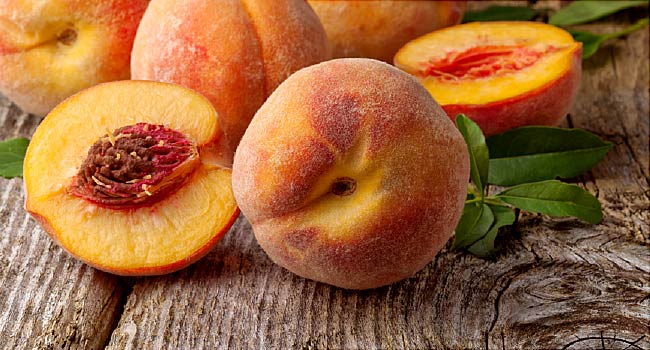
I love a piece of fruit after going to the beach! It’s a healthy, easy way to replenish sugars and nutrients after sweating in the hot sun and burning energy in the water, and since the sugar is fructose, my body can break it down and absorb it quickly. (A bonus when I’m having to do the driving.) Usually, I grab a banana for the higher sugar amount and potassium. On this day, however, we were out of bananas but had a bag of beautiful peaches in the refrigerator, so I grabbed one for each of us.

The peach skins felt a little thin under my fingertips, and I made a joke about that. Then they went into our lunch sack for later in the day. It was after 5:00 when we left the beach. As we were early in our drive home, I anticipated biting into this sweet, juicy, delicious peach. And it was sweet and delicious and just juicy enough that it didn’t make a mess all over me. You know what I’m talking about–when the juice drips down your chin and onto your chest, and when it drips all over your hand and starts to run down your arm.

peaches
Sweet, juicy, yummy peaches

I’m going down the road and eating this peach. I get to the pit and notice it’s split so I can see the kernel. The kernel was covered in a layer of fuzzy mold. Nothing on the outside of the peach or even the yummy meat of the peach itself could’ve prepared me for the decay inside of it.

Seeing this moldy peach kernel reminded me of how people can be sometimes. They can look absolutely desirable on the outside, whatever “desirable” we want to see and they want to show. Maybe they’re physically attractive. Maybe they say the right things or act the right ways. Perhaps they make a big show of their faith and spew God-talk to everyone within earshot, but inside, they harbor this nugget of rot and decay that eventually will consume their entire being, showing the world how they’re rotten from the core.

In Mark 7:14-23, Jesus tells his disciples how it is what is inside a person that will make them clean or unclean. What we eat goes in one end and out the other. What our bodies don’t need, they expel. What comes out is what makes us filthy, for what comes out of our mouths or comes out in our attitudes originates from our hearts. When we are rotten from the core, that shows.

Jesus was using the Pharisees as a thinly veiled object lesson, and in fact, he had confronted the Pharisees on their hypocrisy. They made a huge show of praying out in public and everyone knew when they fasted. They were flamboyant in their tithes of cooking herbs, but not in their help for the widows and orphans–or even their own aging parents. These Pharisees were public in their religiosity but not at all in their kindness or compassion. They looked just peachy on the outside, but their insides were molding.

You know what’s better than a sweet, juicy peach with a busted pit and a molding kernel? A sweet, juicy peach with a perfectly intact pit and a healthy kernel. We’re called to be that. That’s the peach that’ll only go bad from the outside, not from a bad core. That’s the peach that’s desirable. How do we be that peach? We are that peach through quiet relationship with God. Our desirability comes from showing love and compassion to others. It also comes from advocating for vulnerable people who can’t do a thing for us except maybe reflect God’s love back to us. And how do we keep our pits from rotting? It’s so simple: We do this by walking humbly with God. We go through life in this beautiful relationship, and that will keep us from being rotten from the core.

Please follow and like us:
Pin Share
Categories
Ministry

If America’s First, Who Isn’t?

I love logic grid puzzles. Maybe you’ve played around with these for fun (Brainzilla.com has a lot of them). If you took the Graduate Record Exam general exam to get into a graduate program, these made up the entire Analytical sections. Besides being good brain exercise, these puzzles reinforce one basic truth: Only one item (or person) can occupy a single ordinal space at a time. For example, if Alice is the fourth person in line, she cannot also be the first in line. Additionally, if that fourth space holds Alice, it cannot also hold Stephen. Only one thing, person, or value can be first.

Jesus says this. He says in Matthew, “You cannot worship both God and money because you’ll end up loving one and hating the other.” One or the other has to be first. If you look at the history of the Israelites, they got in trouble as a nation and with God when they tried to, what I call, “hedge their bets.” This was when they followed the law–sort of–and observed the high holy days but also enjoyed some Ba’al and Asherah worship, just to ensure they’d get the rain they needed for a good harvest. (Plus, the Asherah worship came with sex, so not exactly a hard sell for the Israelites.) They tried to give both Yahweh and the Canaanite deities equal footing, tried to put them both in first place.

Just like you can’t worship both God and money, you can’t worship both God and, well, anything else. Maybe you don’t think of it as “worshiping” something else, but there’s an awful fine line between “liking” something and idolizing something. I may like watching soccer, but when I skip church to be able to watch that particular match, then my enjoyment of the game has replaced my worship of God. Perhaps it’s “for the kids.” They love playing soccer, but what am I teaching them when I allow them to miss church to follow their passion? I’m teaching them that worshiping God within the community of believers isn’t that important.

If someone were to say, “I should always be number one! I should always get what I want before everyone else!” we’d likely look at them with the side eye, thinking they’re selfish. And they would be acting selfishly. The Word of God speaks against this type of mindset. In First Corinthians 11, Paul instructs the people of that church there not to take more than they need at the fellowship meal, to leave some for those who are less well off. There was a pecking order, where the higher class members got to go first through the line. If they took what they felt was their “right,” then there wouldn’t be any left for their brothers and sisters in Christ who were in line behind them.

The Bible teaches that it’s not about being first. God’s got that place already locked in. Jesus says that if anyone wants to be first, then they must be last of all. It takes humility to let others go first. Within community, we each take just enough to ensure that everyone has what they need.

So what does all this have to do with “America First”? The idea is selfish. If we are going to tout that we’re a “Christian nation” (we’re not, so don’t worry about that), but we’re acting in a way that blatantly violates the Word of God, then we are nothing but a nation of hypocrites. And if you’re saying, “America first,” guess who’s not first for you? That’s right. God can’t occupy a spot that you’ve placed something else into. Just like with a logic puzzle, only one value can occupy each ordinal spot, and if America is first, then God isn’t.

What I’ve observed the past few months is that a policy of “America not-first” has actually strengthened us as a nation. That big guy in the church community who thinks he’s all that and more and acts in selfish ways, believing he doesn’t need anyone, actually ends up suffering for the lack of community and interdependence. Sure, he may look tough and independent and strong, but he’s living apart from how God created him. On the other hand, the guy who is vulnerable and leans on people in his community may look weak by worldly standards but actually emerges as strong because he has the backing of all these other people.

We looked silly as the big nation that tried to act like it was all that. Trying to be independent means not being interdependent. Not only were we not helping other nations, we also weren’t accepting help from other nations, and this left us vulnerable. Yet, they didn’t forget us. Our allies waited and wondered. They wondered what happened to our little experiment in democracy and waited to see if we’d come back to the community. And, thankfully, we have. We don’t want to give of ourselves to our own detriment, but we also have to realize that we do need the help and support of our allies from time to time. It’s the same on the global scale as it is in each of our small communities. I, for one, feel better that we have rejoined our global community, for it is in community that things get done that hastens the coming of the Kingdom of God.


Please follow and like us:
Pin Share
Categories
Ministry

Brushing the Dust Off Our Feet

Jesus teaches his apostles to brush the dust off their feet if they come to a town that won’t receive them or listen to them. What does that mean for us?

Brushing the Dust Off Our Feet from Sara Nesbitt on Vimeo.

Please follow and like us:
Pin Share
Categories
Ministry

Mardi Gras Reflections

Oh, what a difference a year makes! We are getting closer to that time. You know the one I mean. That day when Covid began to hit our shores, when we could no longer think about the virus being “over there” in China or Spain or Italy. When we looked at those countries being on full lock-down and thought, Thank goodness that’s not us having to do that.

But we’re not there, yet. As I look back on Mardi Gras a year ago, it’s with happy thoughts. It was a gorgeous winter day, much like today. The sun was out and it was warmer than it had been. That brought an energetic vibe to everyone we encountered. My older daughter was in her first semester of in-person classes at the local community college as part of her dual enrollment program. That left my younger daughter and me with a few hours to while away, often sitting in the library and knocking out her classes.

On this particular day, completely for kicks and giggles, she and I were wearing Mardi Gras beads that I had from a party several years ago. The day was so gorgeous that we couldn’t stand being stuck in the library after weeks of cold, grey weather. (Sound familiar?) We decided to take a walk around downtown Wilmington, going down to Cape Fear Spice Merchants and exploring various small shops in between.

I won’t bore you with every place we visited. We dropped in on a local bookseller who asked about my soap business. When I told her I was writing a book, she said to let her know when it’s out so she can buy it and stock it. I wasn’t prepared for that! I just happen to like this lady and her shop, but hello, elevator pitch–before my book was even finished! We explored a new-to-us small grocery with bulk spices and herbs and got ice cream (yeah, it was that warm). We smiled at people and said “hi.” We held hands and acted a little silly and just had a wonderful time.

As we’re home today, nowhere near downtown, we remember that day fondly. It was certainly a very different Mardi Gras from what today looks like. A lot of those businesses are operating under very limited hours. The bookshop only allows browsing a couple of days a week. By all accounts, downtown is more like a ghost town with very few people out and about on their lunch hours since so many people are working from home or have lost their jobs altogether.

Mardi Gras–Fat Tuesday–is the day before Lent, a time of sacrifice and reflection before Easter. When we’ve sacrificed so much that we used to take for granted, things like communal worship, hugs, social time, even sitting in the library to read, it’s hard to think of what else we can sacrifice. Some people have had to sacrifice family time (thank you front-line workers!) and their health. Others have lost loved ones due to the virus. When put that way, what else do we have to give up?

Instead of subtracting something from our lives this Lenten season, why not add to them? What if we were to spend Lent reading books or other materials that will serve to help us love God and others better? What if we were to add prayerful meditation to our days where we sit in silence and listen for God to speak? Or what if we were to learn how to do something that will benefit someone else in the Kingdom of God? Or, how about we pray for a different person each day of Lent, no repeats?

This Lenten season is definitely much different from last year’s. If you’re like my family, you probably felt like it was some crazy sort of hyper-Lent where you were sacrificing something new every day of Lent without intention or prayerful forethought. We will make the best of this, using the space of covid-induced sacrifices to be mindful of new ways to love God and love others.

Please follow and like us:
Pin Share
Categories
Ministry

Sowing Seeds in Your Crap-Filled Heart

Again Jesus began to teach by the lake. The crowd that gathered around him was so large that he got into a boat and sat in it out on the lake, while all the people were along the shore at the water’s edge. He taught them many things by parables, and in his teaching said: “Listen! A farmer went out to sow his seed. As he was scattering the seed, some fell along the path, and the birds came and ate it up. Some fell on rocky places, where it did not have much soil. It sprang up quickly, because the soil was shallow. But when the sun came up, the plants were scorched, and they withered because they had no root. Other seed fell among thorns, which grew up and choked the plants, so that they did not bear grain. Still other seed fell on good soil. It came up, grew and produced a crop, some multiplying thirty, some sixty, some a hundred times.” (Mark 4:1-8, NIV)

My Grandpa was a great gardener. He grew up on the family farm, and when he moved the family down to a small, perfectly grid-laid town in North Carolina, he had a little plot of land where he grew a few fig trees and kept a thriving small garden. Even as a quite old man, he tended his garden from tilling the soil to harvest, and a robust harvest often rewarded his efforts, and we as his family got to enjoy the fruits of his labors, too.

As good of care as he took of his garden, though, the occasional rock would appear. He could leave it where it lay, running the risk that an animal going through the garden might disturb it, pushing it over onto a sprout and possibly killing the plant. So he’d toss it to the edge of the garden where it couldn’t do any harm to his plants.

In this parable of Jesus, he never mentions rocks in our otherwise good soil, but they sometimes crop up (no pun attended). Jesus’ focus is on the soil that receives the seed.

I have a friend named Becca (not her real name). Becca has had some crap heaped up in her heart. Now, I don’t know if you have done much gardening, but composted organic matter, whether kitchen scraps or manure, can make the cheapest, most awful soil rich and nourishing. This crap lay on top of the soil of her heart for a while. If you’ve never smelled freshly laid manure on a field, it’s a noxious, disgusting odor! That happened to Becca; that crap stunk up her heart for a while. Then something happened. The Spirit came in and worked that crap into the soil of her heart. Once the crap gets worked into the soil, it then becomes fertilizer and makes the soil rich and ready for planting.

Suddenly, instead of having a stinky, rank, malnourished heart, Becca had a heart that was fertilized and held good, rich, healthy soil. Then along came the Word. It landed on her heart and seeds began to grow. Becca decided recently to follow Jesus as her Lord and Savior. Those seeds that landed on that great soil that had one time been barren took root and are thriving. It’s early days yet, but I just know that this word is going to produce a massive harvest in her life for the Kingdom of God. It’s already beginning to multiply in her life.

Like my friend, maybe you’re feeling like your heart is worthless to God, stinky from all the crap in your life, and perhaps you’re feeling like you can’t even be present with God right now. That happens to all of us for a season, but it is just for a season. Eventually, after days or weeks or months or years, the Holy Spirit tills up the junk in our hearts, working that crap in to leave them open, fertile, receptive, and ready to grow.

Even with the best nourished heart with a lot of growth, some rocks can show up, and we have to get them out. Rocks can look like distractions, bad relationships, bad habits, or just bad choices. They’re not enough to prevent or stop us from producing spiritual fruit, but they can inhibit some growth if they stay there. So, like my grandpa would toss the rocks out of his garden, we also have to toss these rocks out of our hearts. Now, to do that, we have to acknowledge the rocks exist. We have to see them and hold them in our hands before getting rid of them. We can’t go on ignoring them, hoping they’ll go away on their own. It doesn’t work like that. But once they’re gone, our spiritual gardens are ready once more to produce abundantly.

Don’t give up on your faith journey or what God might be doing in your life because of a layer of crap or a few rocks. The Holy Spirit is bigger and more powerful than anything and everything we are dealing with.

Please follow and like us:
Pin Share
RSS
Follow by Email
LinkedIn
Share
INSTAGRAM
Copy link
URL has been copied successfully!